Bali's new short-term rental rules: a problem for some, an opportunity for others
Machine translation. Original (Hungarian): Bali új szálláskiadási szabályai: kinek probléma, kinek lehetőség?
Glopra expert · 2026-10-05

Since August 2026, renting out a villa in Bali on a short-term basis has required a permit and a property in the right zone. Three-quarters of listings in Canggu are in the wrong zone. From mid-2027, enforcement will become automated.
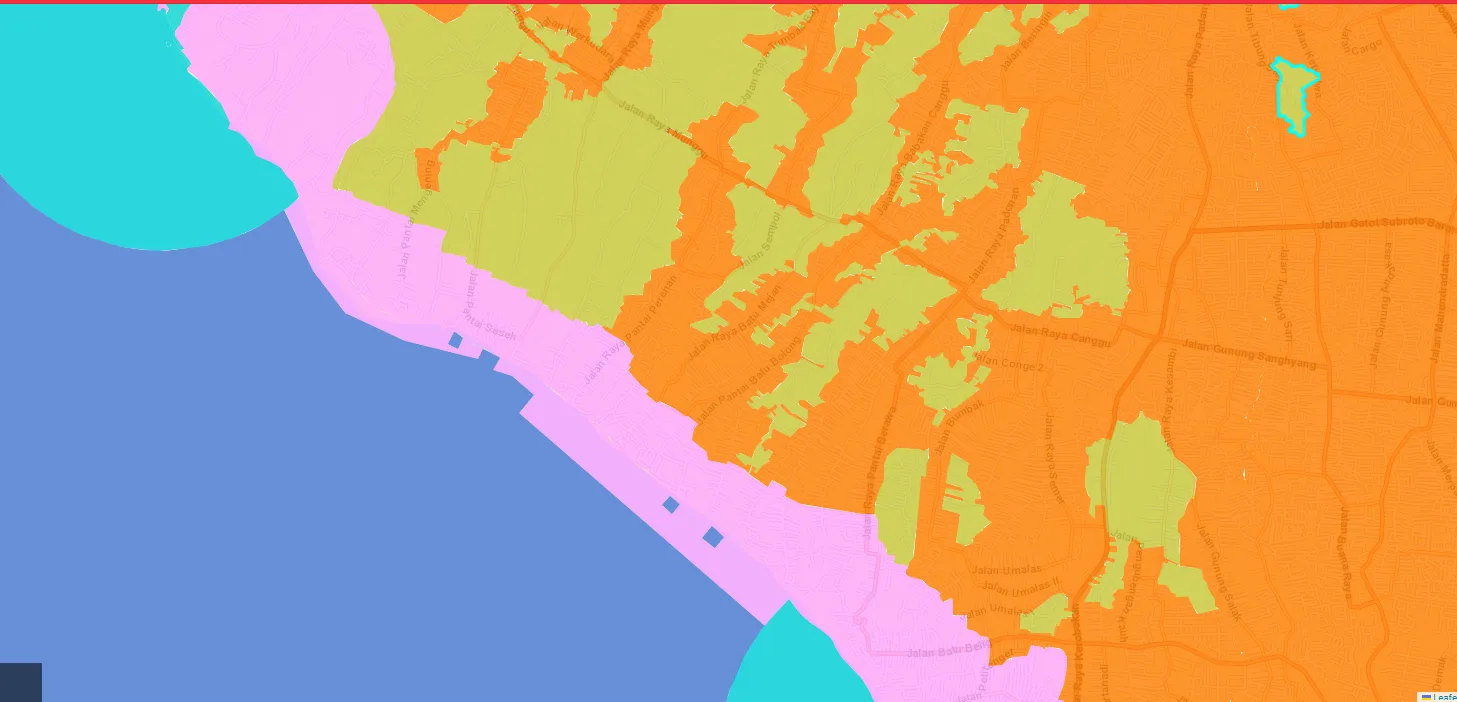
For years, anyone in Bali could list a villa on Airbnb without a permit. That era is now over. Under the new rules, short-term rentals are only permitted where the operator holds the required licence and the property sits in a zone where such use is allowed.
This is not a local Balinese ordinance — it is a national regulatory framework operating on three levels: the 2025 amendment to the tourism law (UU 18/2025), the government regulation on risk-based licensing (PP 28/2025), and the ministerial decree on accommodation establishments (Permenpar 6/2025).
Platforms are required to remove unlicensed listings. The original deadline of 31 March 2026 was extended twice, and the deletion of listings ultimately began on 1 August 2026.
Why is this happening?
At first glance this may sound alarming, but it is worth understanding the reasoning behind it. In recent years Bali had begun to fall victim to its own success: the vast majority of rental properties were operating without permits or paying taxes, creating an unfair playing field for those who did follow the rules. The government's goal is not to reduce tourist numbers but to bring order to the market and steer it toward higher-quality tourism.
For a new investor, this represents an opportunity rather than a threat. Anyone operating with the proper permits in the right zone stands to benefit — the number of potential competitors may fall significantly while demand remains strong. That can translate into higher occupancy rates and higher nightly rates, and ultimately greater profit. A regulated market is also more predictable: major international hotel chains and investors build and buy precisely where the rules are clear.
The zones: where short-term rentals are permitted
In the Balinese property market, people refer to pink, yellow and green zones. These are not legal terms — they are informal names drawn from the colours used on maps — but they capture the essentials well:
- pink (tourist zone): short-term rental is permitted;
- yellow (residential zone): permitted only under special conditions through a separate procedure, and in practice licences are granted almost exclusively to local Indonesian nationals;
- green (agricultural zone): short-term rental is prohibited.
The official classification is set by the regency's spatial planning document (rencana tata ruang), which cannot be changed at a local level and can be checked by anyone through a publicly available map-based system at balisatudata.baliprov.go.id/peta-tata-ruang.
Canggu: three-quarters of listings are in the wrong location
We measured what this looks like in practice. We cross-referenced 22,653 listings in the Canggu strip against the official zoning map of Badung Regency. The result: only 23.6% of listings fall within a tourist zone. Another 58.4% are in residential zones and 17.5% in agricultural zones.
The tourist zone covers just 18.4% of the total area — a coastal strip 600–1,000 metres wide — and the spatial plan makes no provision for expanding it.
The picture is even worse for smaller villas. Only around one-fifth of listings with 0–2 bedrooms — the size most commonly marketed to investors — are in a tourist zone. Booking.com and Airbnb supply shows the same distribution, meaning the platforms are not yet filtering by zone. As regulation tightens, however, this could change significantly over the next few years. For now, travel platforms are adapting by gradually pushing unverified listings down in search results.
2027: automated enforcement
Enforcement has moved slowly because authorities have been working manually. By May 2026, only 31,233 of the approximately 470,000 listings nationwide had been reviewed — barely 7%.
That changes in mid-2027. The ministry will introduce automated checks that will verify, for every listing across all platforms, whether a valid company registration authorising short-term rental accommodation is in place. This will significantly accelerate the process and, with it, the clean-up of the market.
How much supply could drop out?
Nobody knows precisely. The scale of the reduction depends on what proportion of applications from residential-zone properties will be rejected — and there is currently no reliable data on which to base a forecast.
We modelled three scenarios. If properties in agricultural zones receive no permits but the majority of those in residential zones do, supply in Canggu could fall by around 15% over the coming years. If a significant share of yellow-zone properties also fail to obtain permits, the drop could reach 20%, and in a more extreme scenario as much as 35%.
The precise figure matters less than the direction of travel, though. Anyone whose property is already in a tourist zone with all permits in place holds a significant competitive advantage.
The door has closed: no new permits for foreign-owned companies
Since May 2026, Bali has stopped issuing new permits to foreign-owned companies across 18 categories of activity. Short-term accommodation and the operation of small hotels are both on the list. The governor's stated rationale is that many foreign companies exploited the simplified licensing process to begin offering accommodation without the required certifications, creating unfair competition for local businesses.
Existing permits remain valid. Anyone seeking to enter the Bali villa rental market now through a foreign-owned company will find that route closed. For those already operating, the competitive field is narrowing.
In the interest of transparency, I should note that I myself have exposure to the Bali market. Our company's permits were fortunately completed in December 2025, before the restriction came into force.
The article is the author's own professional opinion, not investment advice.